
Common Email Issues and Step-by-Step Solutions: A Complete Guide
Email has become one of the most important communication tools in both personal and professional life. People use email to send documents, communicate with colleagues, manage business conversations, and receive important updates. Despite its convenience, email users often face technical issues that interrupt communication and productivity.
Problems such as login failures, emails not sending or receiving, spam issues, and attachment errors are quite common. The good news is that most of these problems can be solved with simple troubleshooting steps. In this guide, we will explore the most common email issues and provide clear step-by-step solutions to fix them.
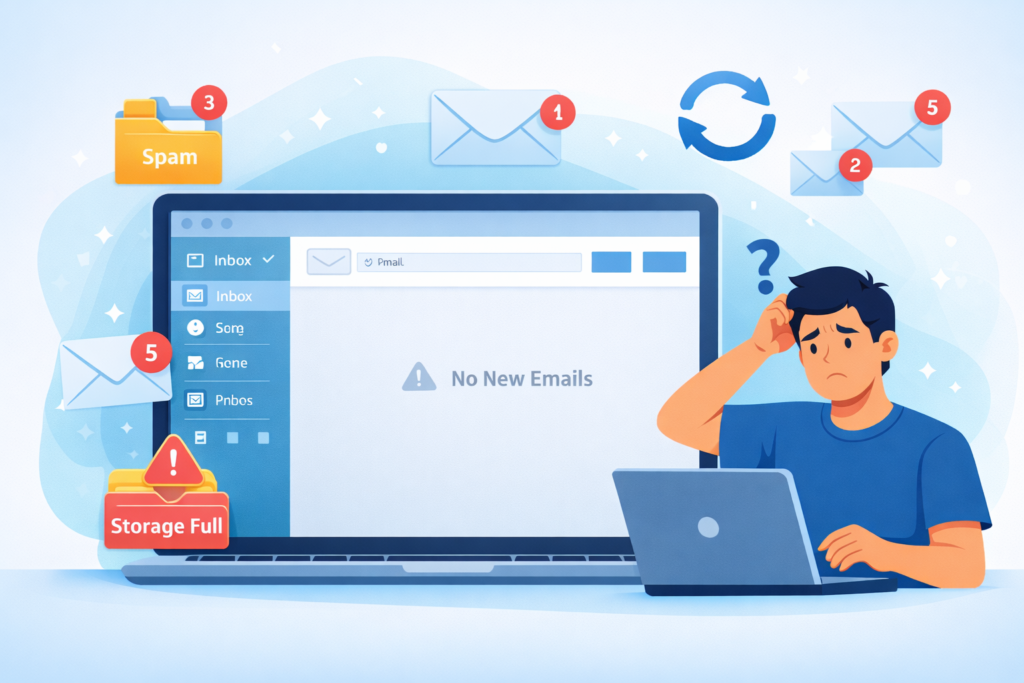
Emails Not Receiving
One of the most frustrating problems users experience is being unable to log into their email account. This issue may occur because of incorrect passwords, forgotten credentials, browser problems, or security blocks triggered by unusual activity.
-
Refresh your inbox or restart your email application.
-
Check the spam or junk folder to see if the email was filtered incorrectly.
-
Verify that your inbox storage is not full.
-
Delete unnecessary emails to free up storage space.
-
Make sure the sender’s email address has not been accidentally blocked.
-
Ask the sender to resend the email if you still cannot find the message.
Emails Not Sending
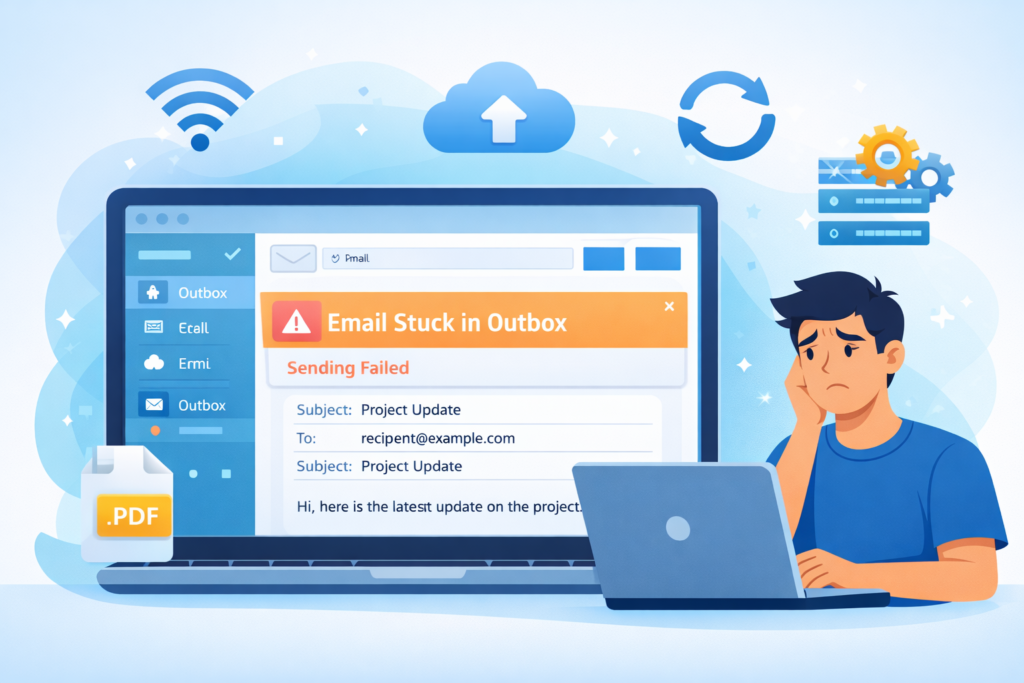
Another common email issue occurs when messages remain stuck in the outbox or fail to send. This problem can happen due to internet connectivity issues, incorrect email settings, or large file attachments.
Step 1 : Connectivity
Check your internet connection and make sure it is stable.
Step 2: Address
Confirm that the recipient’s email address is correct.
Step 3 : Attachments
Review the attachment size. Large files may prevent emails from being sent.
Step 4 : Compression
If the attachment is too large, compress the file or upload it to a cloud storage service and share the link instead.
Step 5 : Restart
Restart your email application or refresh your browser.
Step 6 : Settings
Check your outgoing mail server settings if you are using an email client.
Step 6 : Resend
Try sending the email again after completing these steps
Emails Not Receiving
Sometimes users stop receiving new emails in their inbox. This can cause important messages to be missed and may affect both personal and professional communication.
-
Refresh your inbox or restart your email application.
-
Check the spam or junk folder to see if the email was filtered incorrectly.
-
Verify that your inbox storage is not full.
-
Delete unnecessary emails to free up storage space.
-
Make sure the sender’s email address has not been accidentally blocked.
-
Ask the sender to resend the email if you still cannot find the message.
Emails Going to Spam Folder
Spam filters are designed to protect users from unwanted or harmful messages. However, sometimes legitimate emails are mistakenly placed in the spam folder.
Step 1 : Spam Folder
Open your spam or junk folder.
Step 2: Locate Email
Find the email that should be in your inbox.
Step 3 : Mark Safe
Select the email and click the “Not Spam” or “Move to Inbox” option.
Step 4 : Add Contact
Add the sender’s email address to your contacts list.
Step 5 : Check Filters
Review your email filter settings and remove any filters that may be blocking legitimate emails.
Step 6 : Improve Content
Encourage senders to avoid excessive promotional language or suspicious links in their messages.
Problems with Email Attachments
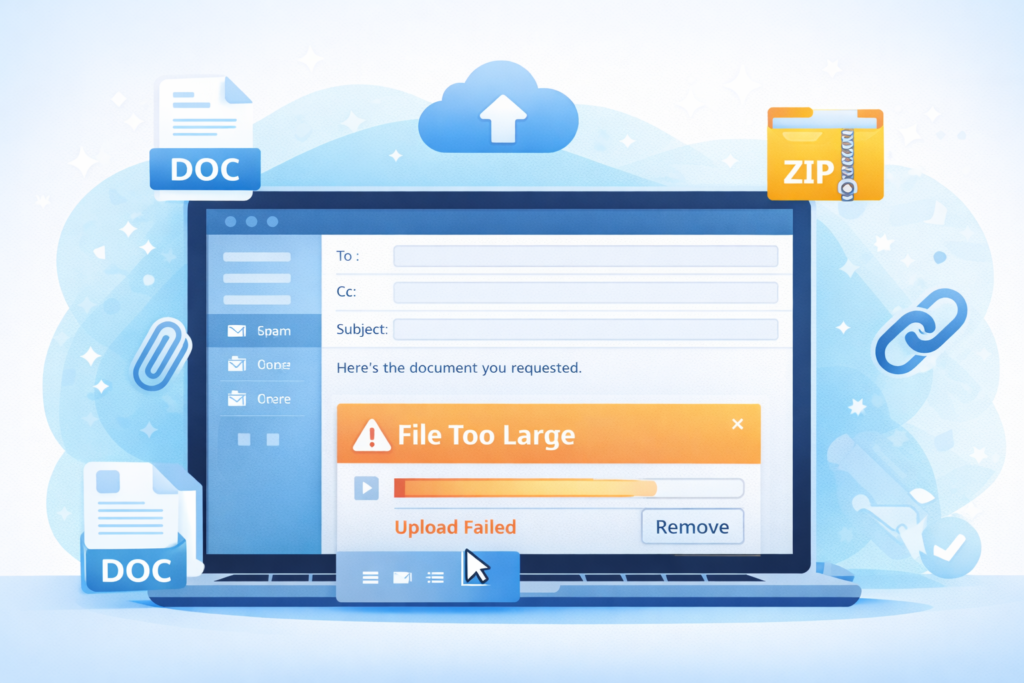
Attachments are commonly used to send documents, images, and other files through email. However, users sometimes face issues while uploading or downloading attachments.
-
Check the size of the file you are trying to attach.
-
If the file is too large, compress it using file compression tools.
-
Ensure the file format is supported by your email service.
-
Upload the file again and try sending the email.
-
If attachments still fail to send, consider sharing the file through a secure file-sharing or cloud storage platform.
Slow Email Performance
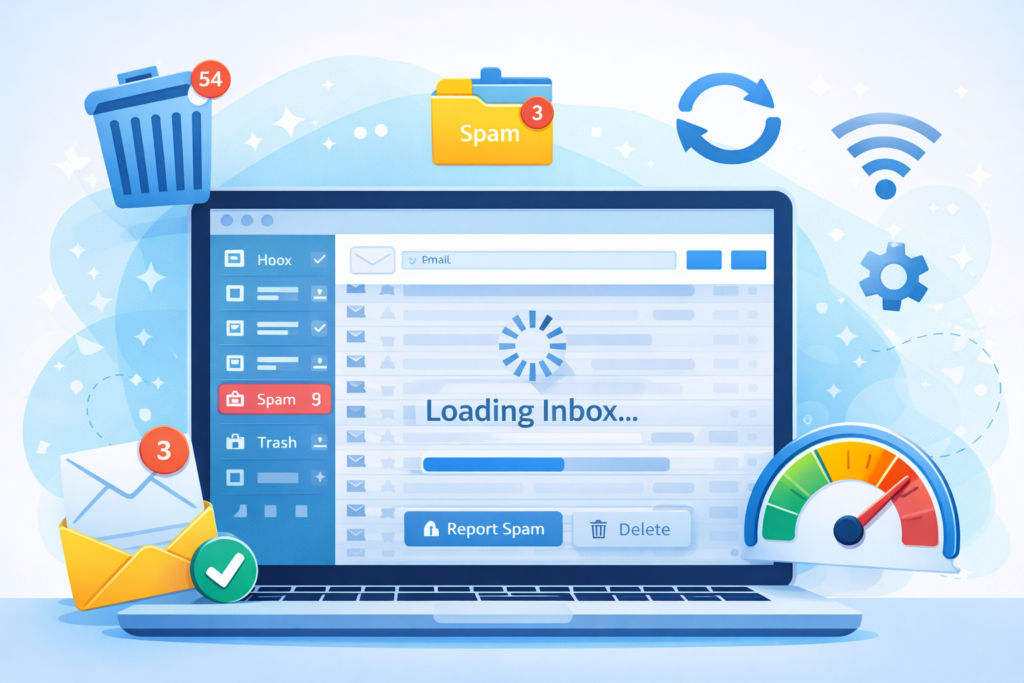
Sometimes email services become slow, making it difficult to open messages or send emails quickly. This issue can occur due to large inbox storage, outdated applications, or poor internet connectivity.
Step 1 : Clean Inbox
Delete unnecessary emails and clear old messages from your inbox.
Step 2: Empty Trash
Empty the spam and trash folders regularly.
Step 3 : Update App
Update your email application or browser to the latest version.
Step 4 : Close Apps
Close unnecessary tabs or applications running in the background.
Step 5 : Check Internet
Check your internet connection and restart your router if necessary.
Suspicious or Phishing Emails
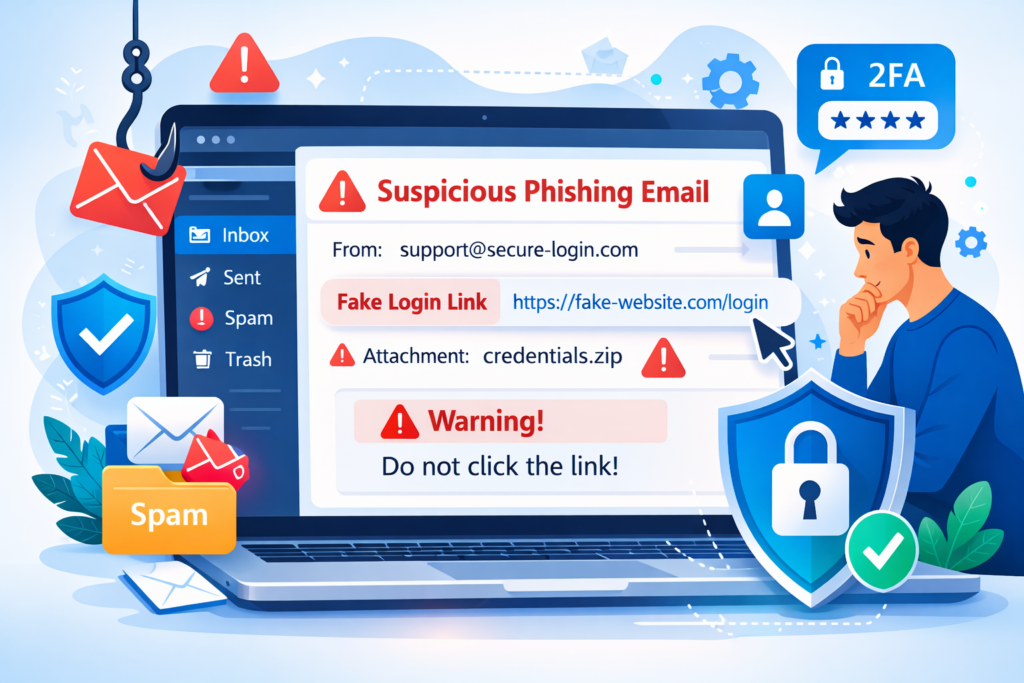
Phishing emails are fraudulent messages designed to trick users into sharing personal information such as passwords or financial details. These emails may appear to come from trusted organizations but often contain suspicious links or attachments.
-
Carefully check the sender’s email address.
-
Avoid clicking on unknown links or downloading suspicious attachments.
-
Delete any email that appears suspicious.
-
Mark the email as spam or report it to your email provider.
-
Change your email password immediately if you believe your account may have been compromised.
-
Enable two-factor authentication to add an extra layer of security.
Tips to Prevent Email Issues
While many email issues can be fixed easily, preventing them in the first place is always better. Here are a few helpful tips to maintain a smooth email experience:
Strong Passwords
Use strong and unique passwords for your email account.
Clean Inbox
Regularly clean your inbox and delete unnecessary emails.
Avoid Suspicious Links
Avoid clicking on suspicious links or attachments.
Keep Apps Updated
Keep your email application and browser updated.
Email issues can be frustrating, especially when they interrupt important communication. However, most problems such as login errors, sending failures, spam filtering, and attachment issues can be solved with simple troubleshooting steps.
By understanding the causes of these problems and following the step-by-step solutions outlined in this guide, users can quickly resolve email issues and maintain a reliable communication system.
Regular maintenance, awareness of security risks, and proper email management practices will help ensure that your email account remains efficient, secure, and easy to use.
Help You To Grow Your Business
Disclaimer: Accessemail, owned and operated by Allroundfix LLC, is not affiliated, endorsed, or sponsored by any third-party brands, products, or services mentioned on this website. All references to third-party names, logos, or trademarks are for informational or educational purposes only and do not imply any partnership, endorsement, or association. Use of any third-party products or services is at your own discretion.
About Company
Welcome to our website. Our platform is dedicated to helping users solve common email-related problems through clear and easy-to-follow guides. We understand how frustrating email issues can be, whether it’s trouble sending or receiving messages, login errors, account settings, or troubleshooting technical problems.
Our Services
Contact Us
Feel free to contact & reach us !
- Address : 670 River St, Boston, Massachusetts 02136, United States
- Email : info@accessemail.online
- Phone : +1 (7896) 987-698